For essays, make sure you prepared 10-20 real-life examples as evidence for your stand. Remember to develop your essay according to what is asked in the question.
--------
1. Following the crowd/public/society
A. Do
people need to compare themselves with others in order to appreciate what they
have?
Yes:

We tend to take
what we have for granted. Comparisons with others help us appreciate what we
have and sympathize with the less fortunate. Siddhārtha Gautama was a
spiritual teacher from ancient India who founded Buddhism. At the age of 29, Siddhartha
left his palace to meet his subjects. Despite his father's efforts to hide from
him the sick, aged and suffering, Siddhartha was said to have seen an old man.
When his charioteer Channa explained to him that all people grew old, the
prince went on further trips beyond the palace. On these he encountered a
diseased man, a decaying corpse, and an ascetic. These depressed him, and he strove
to overcome ageing, sickness, and death by living the life of an ascetic.
B. Is
there any value for people to belong only to a group or groups with which they
have something in common?
Yes:
The
identification of oneself as a member of a group makes them feel secure and
motivates them to fight against discrimination.
The
Black Consciousness Movement (BCM) was a grassroots anti-Apartheid activist
movement that emerged in South Africa in the mid-1960s out of the political
vacuum created by the jailing and banning of the African National Congress and
Pan Africanist Congress leadership after the Sharpeville Massacre in 1960. The
BCM represented a social movement for political consciousness. The BCM attacked what they saw
as traditional white values, especially the 'condescending' values of white
people of liberal opinion. They refused to engage white liberal opinion on the
pros and cons of black consciousness, and emphasized the rejection of white
monopoly on truth as a central tenet of their movement. While this philosophy
at first generated disagreement amongst black anti-Apartheid activists within
South Africa, it was soon adopted by most as a positive development. As a
result, there emerged a greater cohesiveness and solidarity amongst black
groups in general, which in turn brought black consciousness to the forefront
of the anti-Apartheid struggle within South Africa.
C. Is
it always best to determine one's own views of right and wrong, or can we
benefit from following the crowd?
Yes

It is always important to determine one’s own
views and question the validity of public beliefs. Martin Luther King, Jr. (January 15, 1929 – April 4, 1968)
was an American clergyman, activist, and prominent leader in the African-American
Civil Rights Movement. He is best known for being an iconic figure in the
advancement of civil rights in the United States and around the world, using
nonviolent methods following the teachings of Mahatma Gandhi. King is often
presented as a heroic leader in the history of modern American liberalism. A
Baptist minister, King became a civil rights activist early in his career. He
led the 1955 Montgomery Bus Boycott and helped found the Southern Christian
Leadership Conference in 1957, serving as its first president. King's efforts
led to the 1963 March on Washington, where King delivered his "I Have a
Dream" speech. There, he expanded American values to include the vision of
a color blind society, and established his reputation as one of the greatest
orators in American history.
D. Are
people more likely to be productive and successful when they ignore the
opinions of others?
Yes

Sometimes one has to fight against the
opinions of others in order to become successful. William Harvey (1 April 1578 – 3 June 1657) was an English
physician who was the first person to describe completely and in detail the
systemic circulation and properties of blood being pumped to the body by the
heart. At the time of Harvey's publication of circulation of the blood,
Claudius Galen had been an influential medical authority for several centuries.
The works of Galen were widely taught and remain accepted within context in
western and eastern medical encyclopedic references. Harvey's discoveries
inevitably and famously came into conflict with Galen's teachings and the
publication of his treatise incited considerable controversy. Some doctors
affirmed they would "rather err with Galen than proclaim the truth with
Harvey." Enmity towards Harvey grew among some doctors in the seventeenth
century. But it was his book that made him an important figure in both the history
of medicine and of human. Despite the initial hostility, Harvey’s work has now
been widely recognized.
E. Is it more
valuable for people to fit in than to be unique and different?

Galileo's
championing of heliocentrism was
controversial within his lifetime, when most subscribed to either geocentrism or
the Tychonic system. He met with opposition from
astronomers, who doubted heliocentrism due to the absence of an observed stellar parallax. The matter was investigated by the Roman Inquisition in
1615, and they concluded that it could only be supported as a possibility, not
as an established fact. Galileo later defended his views in Dialogue Concerning the
Two Chief World Systems, which appeared to attack Pope Urban VIII and
thus alienated him and theJesuits,
who had both supported Galileo up until this point. He was tried by the
Inquisition, found "vehemently suspect of heresy", forced to recant,
and spent the rest of his life under house arrest. It was while Galileo was
under house arrest that he wrote one of his finest works, Two New
Sciences. Here he summarized the work he had done some forty
years earlier, on the two sciences now called kinematics and strength of materials.
2. Following creativity and the arts
A. Is
it always better to be original than to imitate or use the ideas of others?
Yes:
B. Can
people ever be truly original?
Yes

Merely
copying something is much easier than creating a new idea. But not everyone
takes the easy way out. Although it is
an arduous task, being truly original is possible, and Emily Dickinson
exemplifies this ideal. Emily Elizabeth Dickinson (December 10, 1830 – May
15, 1886) was an American poet. Born in Amherst, Massachusetts, to a successful
family with strong community ties, she lived a mostly introverted and reclusive
life. After she studied at the Amherst Academy for seven years in her youth,
she spent a short time at Mount Holyoke Female Seminary before returning to her
family's house in Amherst. Thought of as an eccentric by the locals, she became
known for her penchant for white clothing and her reluctance to greet guests
or, later in life, even leave her room. Most of her friendships were therefore
carried out by correspondence. Although Dickinson was a prolific private poet,
fewer than a dozen of her nearly eighteen hundred poems were published during
her lifetime. Dickinson's aberrant lifestyle was also reflected
by her poetry. She did not follow the rules of traditional iambic pentameter
Shakesperian sonnets. Instead, she did as she pleased. Her peculiar grammar,
syntax, and diction contributed to her deviating style. She had no regard for
meter and rhyme. Dickinson created the slant rhyme and her poems were in
misshapen four line stanzas. Moreover, the controversial topics of death, love,
and immortality all contributed to Dickinson's originality. Although many
people copy her, Emily Dickinson is regarded as one of the best American poets
because she was truly original.
3. Motivation and success
A. Do
people truly benefit from hardship and misfortune?
Yes
People
truly benefit from hardship and misfortune due to the adaptability of facing
these heartbreaking moments. Though difficulties often
topple assiduous workers to stray from overcoming arduous times, these
experiences amass confidence in future approach.

After losing a power struggle with
the board of directors in 1985, Jobs left Apple and founded NeXT, a computer
platform development
company specializing in the higher-education and business markets. In 1986, he
acquired the computer graphics division of Lucasfilm,
which was spun off as Pixar.[10] He was credited in Toy Story (1995) as an executive producer. He
remained CEO and
majority shareholder at 50.1 percent until its acquisition by The Walt Disney Company in 2006, making Jobs Disney's largest
individual shareholder at seven percent and a member of Disney's Board of
Directors.
After difficulties developing a new Mac OS, Apple purchased NeXT in 1996
in order to use NeXTSTEP as the basis for what became Mac OS X. As part
of the deal Jobs was named Apple advisor. As Apple floundered, Jobs took
control of the company and was named "interim CEO" in 1997, or as he
jokingly referred to it, "iCEO". Under his leadership, Apple was
saved from near bankruptcy, and became profitable by 1998. Over the next
decade, Jobs oversaw the development of the iMac, iTunes, iPod, iPhone, and iPad, and on the services
side, the company's Apple Retail
Stores, iTunes Store and the App Store.
The success of these products and services, providing several years of stable
financial returns, propelled Apple to become the world's most valuable publicly
traded company in 2011.The reinvigoration of the company is
regarded by many commentators as one of the greatest turnarounds in business
history.
B. Do
we really benefit from every event or experience in some way
Yes:
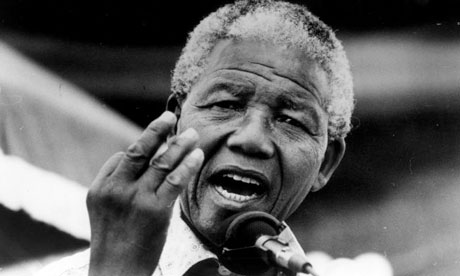
We learn from every event in our life. Nelson Mandela served as President of South Africa from
1994 to 1999, and was the first South African president to be elected in a
fully representative democratic election. Before his presidency, Mandela was an
anti-apartheid activist, and the leader of Umkhonto we Sizwe, the armed wing of
the African National Congress (ANC). In 1962 he was arrested and convicted of
sabotage and other charges, and sentenced to life in prison. Mandela was
imprisoned on Robben Island where he remained for the next eighteen of his
twenty-seven years in prison. While in jail, his reputation grew and he became
widely known as the most significant black leader in South Africa. On the
island, he and others performed hard labour in a lime quarry. Whilst in prison
Mandela undertook study with the University of London by correspondence through
its External Programme and received the degree of Bachelor of Laws. He was
subsequently nominated for the position of Chancellor of the University of
London in the 1981 election, but lost to Princess Anne.
C. Can
knowledge be a burden rather than a benefit?
Yes:
 Knowledge,
in the wrong hands, spells out a recipe for disaster, that is, it will be more
of a burden than a benefit. The dropping of atom
bombs on Hiroshima and Nagasaki in World War II is a prime example of how the
ill-usage of knowledge can be a huge burden and lead to tragedy. During this
period, scientists had just realized the incredible potential of uranium and
plutonium; they also realized that if improperly used, it could lead to
devastating consequences. In the final stages of World War II in 1945, the
United States conducted two atomic bombings against the cities of Hiroshima and
Nagasaki in Japan, the first on August 6, 1945 and the second on August 9,
1945. Within the first two to four months of the bombings, the acute effects
killed 90,000–166,000 people in Hiroshima and 60,000–80,000 in Nagasaki, with
roughly half of the deaths in each city occurring on the first day. During the
following months, large numbers died from the effect of burns, radiation
sickness, and other injuries, compounded by illness. In a US estimate of the
total immediate and short term cause of death, 15–20% died from radiation
sickness, 20–30% from flash burns, and 50–60% from other injuries, compounded
by illness. In both cities, most of the dead were civilians.
Knowledge,
in the wrong hands, spells out a recipe for disaster, that is, it will be more
of a burden than a benefit. The dropping of atom
bombs on Hiroshima and Nagasaki in World War II is a prime example of how the
ill-usage of knowledge can be a huge burden and lead to tragedy. During this
period, scientists had just realized the incredible potential of uranium and
plutonium; they also realized that if improperly used, it could lead to
devastating consequences. In the final stages of World War II in 1945, the
United States conducted two atomic bombings against the cities of Hiroshima and
Nagasaki in Japan, the first on August 6, 1945 and the second on August 9,
1945. Within the first two to four months of the bombings, the acute effects
killed 90,000–166,000 people in Hiroshima and 60,000–80,000 in Nagasaki, with
roughly half of the deaths in each city occurring on the first day. During the
following months, large numbers died from the effect of burns, radiation
sickness, and other injuries, compounded by illness. In a US estimate of the
total immediate and short term cause of death, 15–20% died from radiation
sickness, 20–30% from flash burns, and 50–60% from other injuries, compounded
by illness. In both cities, most of the dead were civilians.
D. Is
the effort involved in pursuing any goal valuable, even if the goal is not
reached?
Yes:
E. Is
identity something people are born with or given, or is it something people
create for themselves?

While some people consider identity as coming from the
way people are raised and the environment people are brought up with, others
believe identity is rendered through a human’s own conscience and his or her
choice of being. Mahatma Gandhi was not
the spiritual, pacifist that we know him to be since birth but only developed
such ways after cementing values that he chose to live and lead his country by.
Gandi came to India as a bright scholar from England in search of discovering
his true homeland that he had not seen much of as a child. In part, his journey
was a way to discover his roots and, in turn, his identity formed. Gandhi saw
that a storm was brewing in India and the violence with which the British were
ruling India with. Such experiences caused Gandhi to form antipodal values and
resulted in him leading a non-violent revolt after he climbed up the leadership
ladder in India. The gruesome torture and violence exhibited by the British
caused Gandhi to abide by his values and 'ahimsa', fasting to draw attention to
his cause of non-violence. Thus, Gandhi developed his identity due to
experiences, values, and experience and not through innate means as he led
India to independence, cementing his identity forever as the Father of
Independence and as the ultimate pacifist.
F. Are people more likely to be happy if they focus on goals other
than their own happiness?
Yes:

4. Technological progress
A. Does
a strong commitment to technological progress cause a society to neglect other
values, such as education and the protection of the environment?
Yes:
Although technology, from a superficial outlook, seems to be improving
life, it is in reality a problem because it is neglecting other important
values of the world and is thus making the human race's future more vulnerable.
In the 1800's, technology was a neophyte slowly creeping into the
conscience of the average person. As people were busy being impressed by
inventions such as the light bulb and the automobile, more and more people
decided to dedicate themselves to creating new products, whether it was for a
philanthropic cause or a thirst for wealth. However, as materialism invaded
American in the 1920's, people took the latter route and started inventing for
the possibility of great wealth. The purpose of technology, originally as an
attempt to uncover the secrets of our world, has been discarded by the hostile
force of human avarice. For example, America started flowing along these lines
and is still dominated by this capitalist ideal to this day. Our commitment to
technology has taken us along the wrong path in growth and has caused us to
neglect values such as the protection of the environment.
One glaring example is water sewage and plumbing. People
originally embraced this technology because it is obvious that cleaning an
outhouse is not as appealing as simply flushing the toilet and letting the
wastes flow away. The process of using the restrooms is easier and more
hygienic, thus improving life. Or is it? The problem with this seemingly
perfect process is how people deal is how people deal with the wastes. Many
companies simply dump the wastes into rivers, lakes, and ponds. For example,
the meaning of the Ohio River is "beautiful river", as properly named
by the Native Americans a few hundred years ago. However, now the Ohio River is
a dump for sewage and waste to empty into. With water sewage and plumbing,
humans have embraced technology but essentially ignored the environment.
B. Are
there benefits to be gained from avoiding the use of modern technology, even
when using it would make life easier?
Yes:


No comments:
Post a Comment